Nigeria Warns Citizens in South Africa After Eastern Cape Protest Turns Violent.
Nigeria has advised its citizens in South Africa to be cautious after a protest in the Eastern Cape turned violent. The unrest followed tensions over the recognition of an Igbo community leader in KuGompo, with authorities condemning the violence and urging calm.
 LEVY M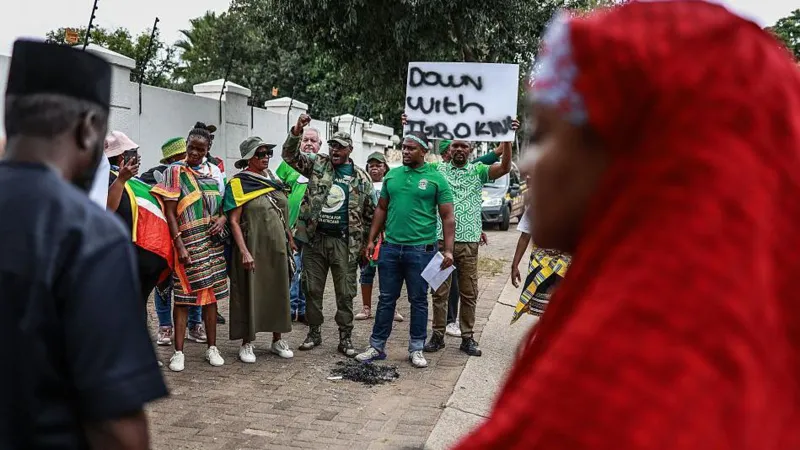
Nigeria’s High Commission in South Africa has advised Nigerian nationals to remain vigilant after an anti-ilregular immigration protest in the Eastern Cape turned violent.
The demonstration took place on Monday in the port city of KuGompo, formerly known as East London. What began as a peaceful march later descended into chaos after claims emerged that one of the protesters had been assaulted by a foreign national. Following that allegation, several shops and vehicles were attacked and damaged.
The unrest comes amid growing tension surrounding the recent recognition of a Nigerian community figure in the city. He was given a traditional Igbo title that has been interpreted as “king of the Igbo people in East London.”
Some local residents viewed the development with suspicion, believing it suggested an attempt to establish political influence in the area.
Traditional leader Xhanti Sigcawu, who attended the march, said the ceremony had upset local chiefs, arguing that it appeared to ignore the authority and heritage of the Xhosa community in the region.
According to official figures, South Africa is home to around 2.4 million migrants, making up just under 4% of the population. Many come from neighbouring countries such as Lesotho, Zimbabwe and Mozambique, while a smaller number originate from Nigeria.
Anti-immigrant tension has remained a persistent issue in South Africa for years, at times leading to deadly violence. Sentiment against foreign nationals has also become a recurring issue in political debate.
South African officials, including KuGompo mayor Princess Faku, condemned the violence that followed Monday’s march. Reports indicated that 10 vehicles were set on fire and both local- and foreign-owned businesses were looted.
Faku said the demonstration had support as part of broader concerns around sovereignty, but stressed that violence could not be justified and only worsened the situation.
Authorities have not yet made any arrests.
Nigeria’s High Commission urged its citizens to reduce unnecessary movement and stay away from public gatherings while tensions remain elevated.
The march was organised by a coalition of civil society organisations and political groups.
Two weeks earlier, Solomon Ogbonna Eziko had been recognised by members of the local Igbo diaspora as the “Eze Ndi Igbo East London.” Such titles are commonly used within Igbo communities living outside Nigeria.
The Igbo are one of Nigeria’s largest ethnic groups and are widely represented across the diaspora, particularly from the south-east of the country.
Although Eziko has been acknowledged by members of the Igbo community in KuGompo, the title is regarded as ceremonial and does not carry political authority outside that community. Within the group, the role is largely associated with mediation and participation in cultural events.
A leader within South Africa’s Igbo community, Dr ABC Okokoh, told SABC that the recognition ceremony was a private matter and not an effort to create a kingdom or challenge South African law.
He also expressed regret over the fallout linked to the event.
Some South African cultural commentators criticised the recognition, saying it did not follow local customary processes. The Eastern Cape Department of Cooperative Governance, which oversees traditional affairs, also distanced itself from the ceremony and called for respect for the country’s legal and cultural frameworks.
On Tuesday, during a picket outside Nigeria’s High Commission in Pretoria, a diplomat apologised to South Africans for the developments that followed the recognition of Eziko.